Essence
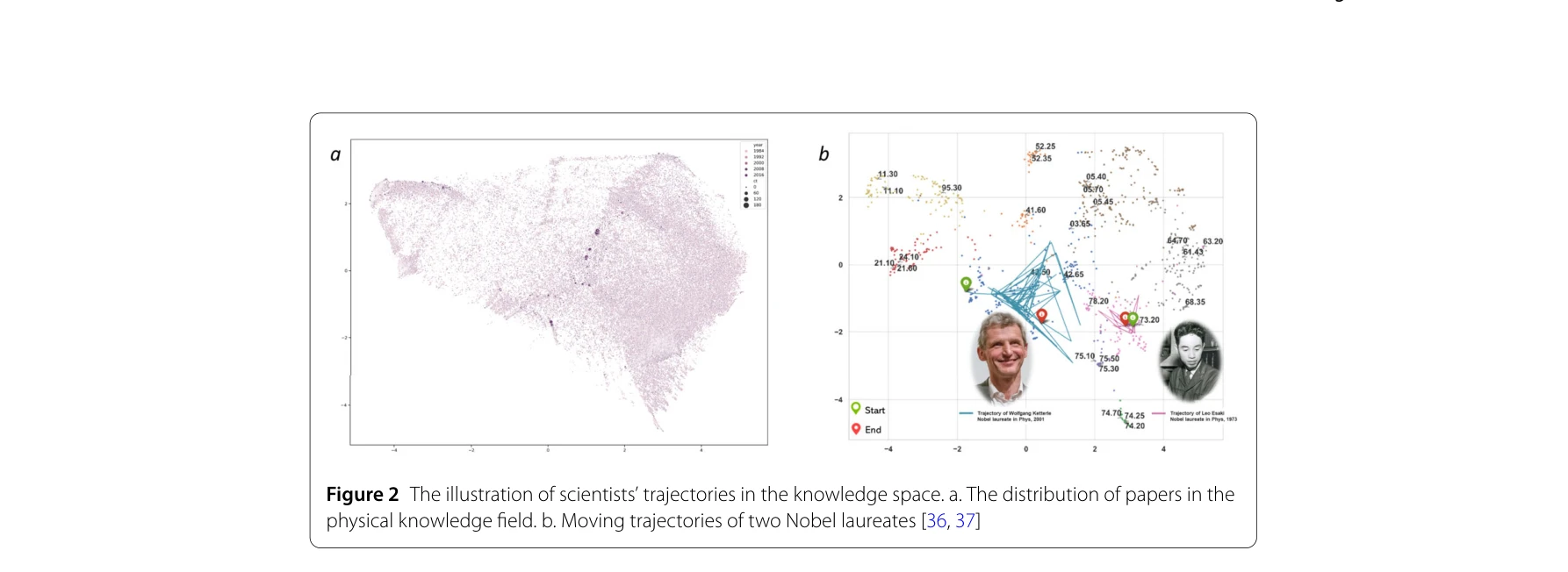
Figure 2 The illustration of scientists’ trajectories in the knowledge space. a. The distribution of papers in the
본 연구는 지리정보시스템(GIS) 기법을 활용하여 과학자들의 연구주제 전환 패턴을 지식공간(knowledge space)에서 탐색 과정으로 분석하고, 보수적 탐색 경향과 집단 행동의 메커니즘을 규명한다.
저자: Feifan Liu, Shuang Zhang, Haoxiang Xia | 날짜: 2024-04-02 | DOI: 10.1140/epjds/s13688-024-00468-z
Figure 2 The illustration of scientists’ trajectories in the knowledge space. a. The distribution of papers in the
본 연구는 지리정보시스템(GIS) 기법을 활용하여 과학자들의 연구주제 전환 패턴을 지식공간(knowledge space)에서 탐색 과정으로 분석하고, 보수적 탐색 경향과 집단 행동의 메커니즘을 규명한다.
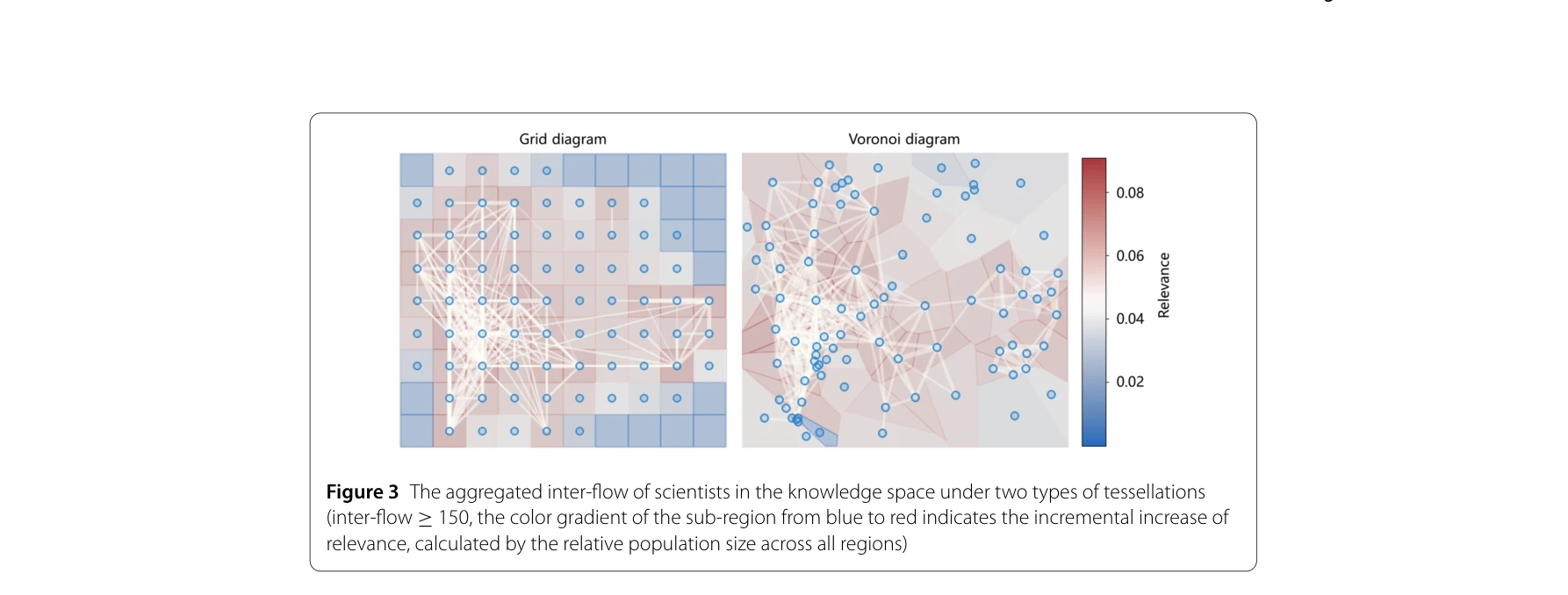
Figure 3 The aggregated inter-flow of scientists in the knowledge space under two types of tessellations
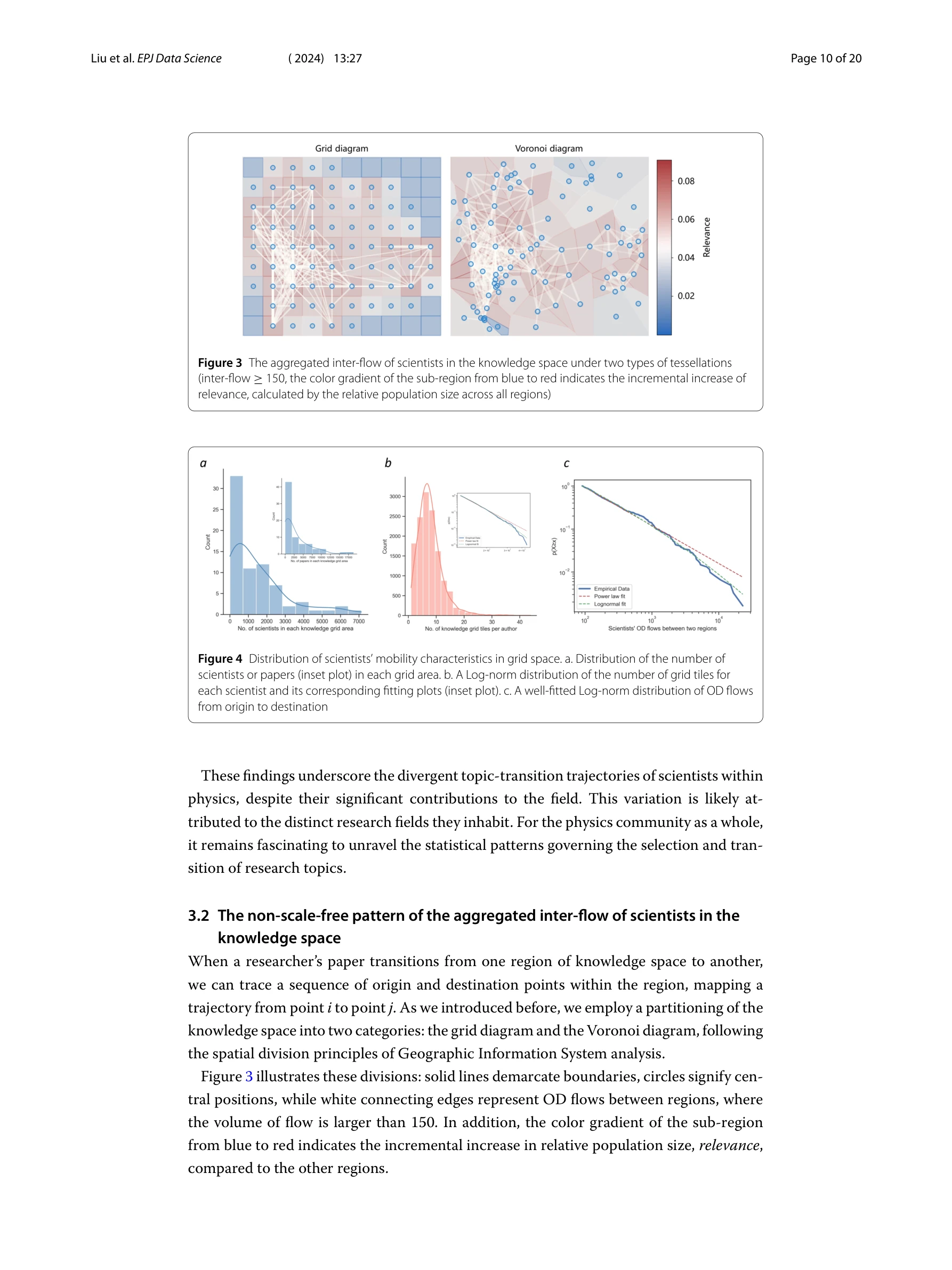
Figure 4 Distribution of scientists’ mobility characteristics in grid space. a. Distribution of the number of
총평: 본 논문은 과학자의 주제 선택 행동을 지식공간 탐색으로 재프레이밍하고 GIS 기법을 창의적으로 적용하여, 개인의 보수성과 사회적 효과(network effects)라는 이중 메커니즘을 실증적으로 규명한 우수한 연구이다. 다만 학문 간 이질성과 시간적 동역학의 깊이 있는 분석으로 한층 강화될 여지가 있다.